Monday, March 18, 2024

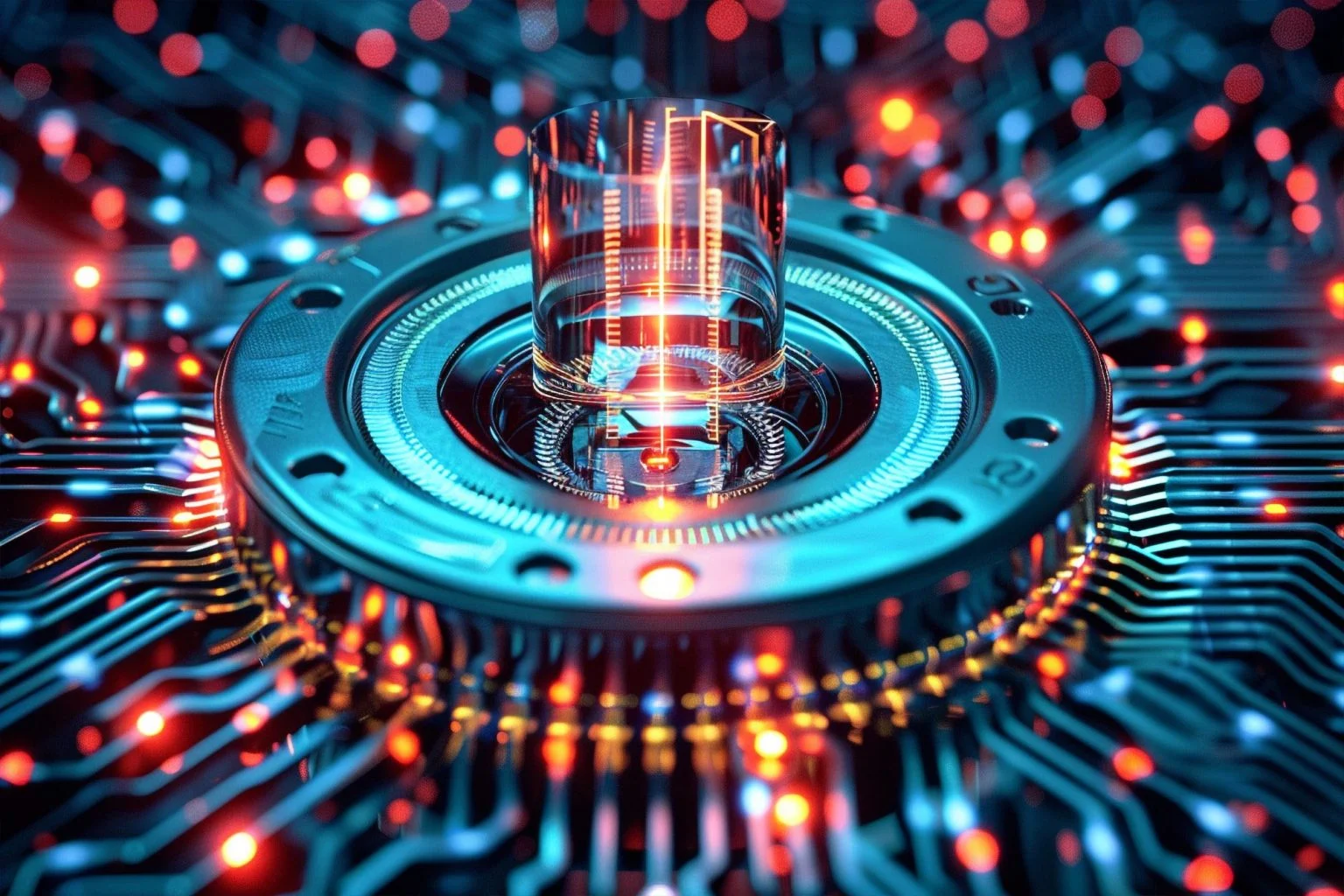
The new atom clocks make records in time measurement.


"Multilevel atoms on a superradiance potential “rollercoaster” inside an optical cavity. The system can be tuned to generate squeezing in a dark state where it will be immune to superradiance. CreditSteven Burrows/Rey Group". (ScitechDaily, Quantum Leap: How Spin Squeezing Pushes Limits of Atomic Clock Accuracy)


New atom clocks use a method called spin squeezing to measure time. The new, highly accurate atom clocks can measure things, like gravitational waves, and dark matter. And many other things. Ability to measure time very accurately based in a fully controlled environment, where outcoming electromagnetic effects are minimized. In the quantum atom clocks the number of used atoms is minimized. And that minimizes the atom's interrelational energy effect. 

The atom clocks are used to research things like time dilation and in highly accurate measurements. Large groups of atom clocks that interact with LIGO-type laser systems can act like an insect's net eye that measures gravity waves. 

Atom clock can measure the time between laser transmission and its echo very accurately. The maser- or radio maser technology makes it possible to create also high-accurate radio-wave-based radar systems. 


Atom clocks are required in radar technology. Where radio waves and echo travel between the object to the plate. In those systems, the radar measures the time that a radio wave travels between the transmitter and the object. The system measures the form of the object using multiple small antennas that send highly accurate coherent radio waves. 

The system must measure the time between transmission and echo in every single antenna separately. The maser system can use nanotechnology to make an antenna group that acts like an insect's net eye. And nanotechnical atom clocks are lightweight systems. 

In traditional atom clocks, there was Cesium in the chamber, and then the Geiger meter calculated the radioactive elements that travel in it. That thing gives a higher accurate time measurement than regular quartz crystals. But things like gravity wave measurements require more accurate systems. In the newer atom clocks, the radioactive element's temperature is fully controlled, and the radioactive crystals are protected against outcoming radiation. 

The idea is that there are things like nano-crystals where Cesium or some other atoms are stored. And in the new atom clocks radioactive atoms hover between sensors. 

The new atom clocks use nano-size crystals where cesium or strontium atoms are trapped. That makes atom clocks safer. However, the use of a minimal number of radioactive materials minimizes the interrelative effects of those atoms. This thing makes atom clocks safer in the case, that somebody wants to steal those systems. 

https://scitechdaily.com/quantum-leap-how-spin-squeezing-pushes-limits-of-atomic-clock-accuracy/


Sunday, March 17, 2024

A new theory suggests that dark matter does not exist.


"A graphical representation of the expansion of the universe from the Big Bang to the present day, with the inflationary epoch represented as the dramatic expansion seen on the left. This visualization shows only a section of the universe; the empty space outside the diagram should not be taken to represent empty space outside the universe (which does not necessarily exist). (Wikipedia, Expansion of the universe)

Powerful redshift makes black holes seem to be in longer distance than they are. 


All gravity fields stretch light. So all gravity fields form a redshift around them. Measure of the age of the universe using black holes is not a very accurate method. When light travels from another side of the universe to Earth. That means all objects behind light stretch it. We cannot see all objects at that route, so that thing causes effects to redshift. 

The reason for that is the ultra-strong redshift around them. The black holes stretch the universe or universe's power fields like a hypothetical Higgs field. This thing means that. The black hole stretches light and forms an extremely strong redshift around it. 

The gravity around black holes is very strong. That means the closer the more gravity streches light. So a redshift is stronger, when the observer is closer to black holes. And if the observer stands near the black hole's event horizon, the black hole seems to be very far away. 

That means. All black holes seem to be in longer distances than they are. The black hole's ability to stretch time-space makes them look smaller than they are because all black holes are like on the bottom of the pothole. The black hole pulls material inside it from a longer distance than the material disk tells. The new theory suggests that dark matter does not exist. The same theory suggests that the age of the universe is 27 billion years. 

That means. Dark matter or the mysterious gravitational effect can form in virtual particles. The virtual particle can be the ultra-fast electron or some other particle. And when it travels in Higgs field it forms the channel behind it. In this model, the Higgs field starts to fill those channels. And then that thing forms waves in Higgs field. 

So are gravitational waves and wave movement in the Higgs field. That thing explains the mystery of gravitational waves and gravitation. The gravitation would be the effect that rolls the Higgs field around the superstring. And that superstring turns the Higgs field direction. That means that gravity affects the Higgs field. 

When the superstring rolls that field around it and conducts it away from the gravity epicenter, that thing forms a situation where the Higgs field travels into that point. And it means that Higgs field acts like a river that pulls matter with it. 

In some other hypotheses, some particles have higher energy levels than researchers measured. The idea is that the neutrinos would be only electrons with hyper-high energy levels, or hyper-high spin. That means the neutrino's energy level is so high, that it hovers in the Higgs field. In that model, the neutrino would be like a ball in a soap bubble. And that explains its ability to travel through the Earth. 

Particles may be forming superstrings there are bubbles. Those bubbles can be extremely small particles or waves in those strings that make the elementary particle look like a string. In that model, the origin of the dark energy could be in the quantum-size roughness of those electrons. 


"The James Webb Space Telescope identified small red dots in the night sky, revealing new insights into the formation of supermassive black holes, challenging existing astronomical theories about their rapid growth in the universe’s early days. (Artist’s concept.) Credit: SciTechDaily.com" (ScitechDaily, Infant Giants: Webb Unveils the Growth of Supermassive Black Holes)


 A new theory suggests that dark matter does not exist.


The idea is that dark matter does not exist in the form of matter. That means the mystery of gravitational effect can explained by a wobbling Higgs field or some kind of bubble in the Higgs field. In the last model, the dark matter is virtual material in the Higgs field. Dark matter would be a point in the Higgs field. 

Where there are lower energy bubbles. Those bubbles are forming an effect that seems like material. The superstrings would be the string-like structures that rotate in the Higgs Field. 

And those bubbles make that theoretical base power field look like cheese. In that model there are lower energy areas in that field, those lower energy bubbles act like material. And those lower energy bubbles make the Higgs field fall in them. This makes those bubbles act like material. And those bubbles form a virtual gravitational effect. 

When Higgs field falls in those bubbles, it can travel through it. On the other side, that thing interacts with the Higgs field on that side. When that Higgs field travels through those bubbles it takes energy from its environment. Then that projection hits another side of the bubble forming an energy impulse that travels in the Higgs field. 


"Estimated division of total energy in the universe into matter, dark matter and dark energy based on five years of WMAP data." (Wikipedia, Dark Energy)


This thing can form dark energy. In some models dark energy forms when the Higgs field wobbles back and forth. When the theoretical Higgs field interacts with an atom it harvests energy from the atom's quantum fields. When the Higgs field wobbles there is a small vacuum on the opposite side of subatomic particles. That shadow pulls energy out from those particles. In that case, the superstring that forms the particle hits the quantum field it transmits energy to that field. 

As well as impacting energy waves can also explain dark energy. In that model, dark energy forms when the expanding universe decreases its energy density. That causes energy to flow out from the material. When two particles of the same size send wave movement, that impact forms a standing wave that collects energy until it can travel in some direction. 

And in that case, all particles send wave movement. So if that energy comes from gluons. That means radiation. That comes from quarks, and leptons can cover that dark energy under it. And if gluons send radiation when they jump between quarks. That radiation can rip atoms and other subatomic particles into pieces. 

The reason for that effect would be that the gravitational effect just pulls the Higgs field into the gravitational center. In some models, the dark matter would be whirled in the Higgs field. When those whirls are moving, they form the maser effect in that whirl.


https://phys.org/news/2024-03-universe-dark.html

https://scitechdaily.com/infant-giants-webb-unveils-the-growth-of-supermassive-black-holes/

https://en.wikipedia.org/wiki/Expansion_of_the_universe

https://en.wikipedia.org/wiki/Dark_energy

https://en.wikipedia.org/wiki/Dark_matter

https://en.wikipedia.org/wiki/Redshift


Altermagnetism, new 2D materials, and quantum materials are the next big step in microelectronics.


"Researchers have pioneered a photon-based qubit communication model, facilitating precise control in quantum computing information transfer. Credit: SciTechDaily.com" (ScitechDaily, Quantum Computing Breakthrough: Photons That Make Quantum Bits “Fly”)

The problem with long-distance quantum transmission is how to protect information on traveling qubits. The system can pack those qubits into the electrons. The idea is that the quantum system slips photons into the electrons. 

This thing makes it possible to protect the information. In some other models system packs qubits in the plasma where that plasma field protects information in the qubit.


"This illustration shows electric current being pumped into platinum (the bottom slab), which results in the creation of an electron spin current that switches the magnetic state of the 2D ferromagnet on top. The colored spheres represent the atoms in the 2D material. Credit: Courtesy of the researchers." (ScitechDaily, MIT’s Electron Spin Magic Sparks Computing Evolution)


The new qubits can fly. 


The new type of quantum communication system that can use technology that makes qubits more effective is the system that makes photons or photonic qubits fly. Quantum systems are more secure than traditional computers because quantum computers can store information in a physical particle. The problem with quantum computers is that they are much more sensitive to outcoming radiation than regular computers. 

The thing. That made researchers make quantum computers was effect, called superposition. In particle accelerates photons sometimes double themselves. The thing is that photons cannot form from emptiness, and the reason for those doubling photons is that photon pushes some kind of electromagnetic field. There is a forming wave in that field, and we see that wave as photons. 

The quantum computer uses quantum entanglement for information transfer. The quantum computer loads information into a photon. And then it creates quantum entanglement between this photon and another photon. After that the information starts to flow from the sending photon to the lower energy, receiving photon. 


"Altermagnets, a newly discovered class of materials, show great potential for spin-based electronics due to their unique magnetic properties. (Artist’s concept.) Credit: SciTechDaily.com" (ScitechDaily, Unlocking the Secrets of Altermagnets in Spin-Based Electronics)

To make information travel from higher to lower energy photons. The system must create a perfect copy of the transmitting photon. Then the system creates quantum entanglement between those photons. The higher energy photon is larger than the lower energy photon. 

When radiation hits the larger photon, it forms an electromagnetic shadow on the other side. Then that photon's power field starts to stretch and when it touches the lower energy photon's energy field, it starts to send oscillation to that lower energy energy field. 

The problem is that long-distance quantum entanglements are hard to make. They require high energy levels. And things like electromagnetic radiation can destroy information in the quantum entanglement. Another way is to store data in the qubit or single photon and send that photon to the receiver of the message. There the system can raise this photon's energy level higher than the receiver's. Then the system can resend the information to the receiver. 


"Mid-infrared light reduces the fluctuations of octahedral rotations in SrTiO3, allowing the material to transform into a ferroelectric state by shifting the central titanium ion either up or down. Credit: Jörg Harms, MPSD" (ScitechDaily, Physicists Unlock the Secrets of Light-Induced Ferroelectricity in Quantum Materials)


Altermagnetism, new 2D materials, and quantum materials are the next big step in microelectronics. 


Altermagnetism is a fascinating tool for researchers when they make microelectronics. The altermagnetism is the magnetism that doesn't form a magnetic field around the wire. And that thing makes it possible to develop new and small-size microelectronic products. Altermagnetic systems can help to keep the microchip's temperature low because there are no crossing magnetic fields. That system is one of the most promising things in computing. 

Another thing that gives interesting results for microchip engineering is photon-controlled ferromagnetism. The idea is that light can adjust the ferromagnetic phenomenon turning position of ferromagnetic crystals. Or the system can adjust the magnetic layer's temperature. 

When attosecond lasers adjust a ferromagnetic crystal's temperature or position, that system can make very high-accurately controlled magnetic fields. If researchers combine these altermagnetic- and ferromagnetic structures, that allows the system can create a highly accurate magnetic field. 

The altermagnetic structures are the next-generation tools for spin-based electronics. The altermagnetic structures make it possible to control electromagnetic fields that interact with spinning electrons. 

The ability to control electron spin makes it possible to create new types of systems that can act between quantum and binary states. The system uses energy stress for the 2D particle structures. That thing makes it possible to control the electron's spin. Electrons are like small antennas, that transmit information to the receiver. The system can use electron pairs to create quantum or qubit lines between two electron layers. 


https://scitechdaily.com/mits-electron-spin-magic-sparks-computing-evolution/


https://scitechdaily.com/physicists-unlock-the-secrets-of-light-induced-ferroelectricity-in-quantum-materials/


https://scitechdaily.com/unlocking-the-secrets-of-altermagnets-in-spin-based-electronics/


https://en.wikipedia.org/wiki/Altermagnetism


Saturday, March 16, 2024

The new AI tools are making better drugs and predicting diseases.

"An AI model developed by the Beckman Institute enables precise medical diagnoses with visual maps for explanation, enhancing doctor-patient communication and facilitating early disease detection." (ScitechDaily, X Marks the Spot: AI’s Treasure Maps Lead to Early Disease Detection)


The GlycoSHIELD AI-based software will revolutionize drug development. The software can simulate the morphology of sugar coats in proteins. That makes it easier to simulate how proteins. And cell's ion pumps interact. Another tool that makes AI more powerful in drug development is new observation tools like nano-acoustic systems. Those systems with very accurate X-rays and other systems can search how neurotransmitters act between neurons. 

The ability to control pain requires the ability to deny the neuro-transmitters travel between neurons. The systems of tomorrow may use some other method than chemical opioids to deny neurotransmitters reach the receiving cell. Those methods can be acoustic systems that destroy neurotransmitters before they transmit the pain signal. Or there could be some kind of fat, that can collect neurotransmitters from the axon hole. The problem is how to transport that fat to the right point and how to remove that fat when the injury is improved or fixed. 

"A NIH-funded study led by Worcester Polytechnic Institute (WPI) aims to utilize artificial intelligence to guide chronic pain patients toward mindfulness-based treatments rather than opioids. By analyzing patient data through machine learning, the research seeks to identify individuals who would benefit most from non-pharmacological interventions, potentially reducing opioid dependence and offering more personalized care. This innovative approach, focusing on chronic lower back pain across diverse populations, could revolutionize pain management and healthcare costs. Credit: Melissa E. Arndt" (ScitechDaily, Avoiding Opiates – A New AI Prescription for Pain)


And that information makes it possible to create new treatments that can be suitable for replacing opioids. The nano-acoustic systems can trap neurotransmitters in the sound waves. Or the acoustic system can destroy those transmitters before they can travel between axons. The other version could be medicine, which marks those neurotransmitters that transport pain signals to immune cells that they must destroy or transport those neurotransmitters away. 

In some models, engineered fat cells. Or cells can put that fat between neurons in the case of pain. Those genetically engineered fat cells can collect or close those neurotransmitters in the fat. And when pain is over the immune cells can collect that fat away. This version requires genetical engineering so that the fat cell can mark this plague for immune cells so that they can remove it. And it must also tie those neurotransmitters. 

This is one vision for systems that can replace opioids. The AI can also collect and analyze information from different sources. That system makes it possible to combine complex data from complex sources. 


"GlycoSHIELD transforms the way sugar chains on proteins are modeled, facilitating drug development with its fast, user-friendly, and energy-efficient algorithm, marking a significant stride in both green computing and medical research. Model of the sugar shield (green) on the GABAA receptor (grey) in a membrane (red) generated by GlycoSHIELD. Credit: Cyril Hanus, Inserm, University Paris-Cité" (ScitechDaily, GlycoSHIELD: New Software Revolutionizes Drug Development)


By the way... 


The AI can predict medical diseases by combining data from other patients. And that thing makes the AI an ultimate assistant to doctors. But the AI can also predict things like volcanic eruptions and earthquakes. The AI can use similar algorithms in that process as it is used for analyzing humans. The sensors analyze different things, but they analyze temperature, earth oscillation, water flow in rivers, and other things like electricity. So the researchers can modify healthcare programs for that purpose. 

And this makes the AI a very good tool for predicting natural diseases. The AI collects datasets about things that happened before the volcano eruption. Then this system compares this dataset with data that sensors give about volcanoes. This makes the AI predict the eruptions. 

But also things like houses with bad conditions have certain details that cause fire and other damages. The AI can collect data about the details of houses that have bad electric wires. Or some other problems. Then the AI can compare that information with other houses. 

The thing is that corrosion is always a similar process. The corrosive process with similar metal alloy is always the same in certain temperatures, radiation, and acidic environments. That means the AI can predict dangerous corrosion very accurately. And that helps the operators plan the service for those tubes and other systems. 

https://scitechdaily.com/avoiding-opiates-a-new-ai-prescription-for-pain/

https://scitechdaily.com/glycoshield-new-software-revolutionizes-drug-development/


https://scitechdaily.com/x-marks-the-spot-ais-treasure-maps-lead-to-early-disease-detection/


Nano-acoustic systems make new types of acoustic observation systems possible.


Acoustic diamonds are a new tool in acoustics. 


Another way to make very accurate soundwaves is to take a frame of 2D materials like graphene square there is a hole. And then electrons or laser beams can make that structure resonate. Another way is to use the electromagnetic field that resonates with the frame and turns electromagnetic energy into an oscillation in the frame. 


Nano-acoustic systems can be the next tool for researching the human body. The new sound-wave-based systems make it possible to see individual cells. Those soundwave-based systems or nano-sonars are tools that can have bigger accuracy. Than ever before. The nano-sonar can use nanodiamonds or nanotubes as so-called nano-LRAD systems that send coherent sound waves to the target. In nanotube-based systems, the nanotube can be in the nanodiamond. 

The term acoustic diamond means a diamond whose system oscillates. The system can create oscillation sending acoustic or electromagnetic waves to the diamond. Diamond transforms that oscillation into sound waves. The system can create oscillation conducting electricity to diamon or it can use laser rays to create extremely strong sound using nanodiamonds. The laser ray can form a so-called photoacoustic phenomenon in diamonds. The laser ray pushes carbon atoms forward it sends oscillation waves in that structure. When the oscillation starts in a diamond, its atomic structure aims soundwaves into one point. 

Nanodiamonds are the tools that make it possible to create very highly accurate and strong sound waves. Those soundwaves can holes in walls and metal structures. So they can used as acoustic drills. The nano-acoustic systems can used as new ultra-accurate sonar systems. The nano-diamond-based sonars can uncover invisible details. Nanodiamond-based acoustic crystals can used to send extremely accurate sound waves into targets.

And that thing makes them also very effective acoustic weapons. The acoustic laser (LRAD) systems can use acoustic diamonds to make coherent sound waves. In those systems, loudspeakers are replaced using acoustic diamonds. And those systems can create acoustic wormholes through the gas. That makes them effective tools for nanotechnology, and those systems can have weapon applications. 

There could be a straight carbon molecule in the nanotube, And then the oscillation in that diamond is sent to the nanotube, which uses the carbon chain to aim those acoustic waves precisely at the right point. The system creates oscillation using some other acoustic system. That transfers waves into the nano-diamond. Or the system can send laser waves into that nanodiamond. Those nano-acoustic systems can act as sonars where sound waves reflect. Or those systems can send acoustic waves through the object, where they act, as acoustic X-ray machines.

In some visions, the nanodiamonds can offer a new way to create small-size flying machines. Nanodiamonds can create stable mono sounds that can make small-size drones fly without moving parts. There could be a series of nanodiamonds on the layer. And then the system sends oscillation into each of them in turn. This kind of diamond-based system can make soundwaves that offer small-size aerial vehicles the ability to hover above the layer. 

The "patterned low-intensity, low-frequency ultrasound" systems can used to detect things from brains. Those systems have no poisonous side effects. And the nano-acoustics make them extremely accurate. High-accurate ultrasounds can search for things like blocks in blood vessels. 

They can see anomalies in blood vessels. But if their accuracy is good enough they can observe living neurons and neuro-transmitters by using ultrasound systems. That kind of system allows researchers to see interactions in living bodies with new tools and new accuracy. 


https://www.freethink.com/health/ultrasound-brain-stimulation

https://scitechdaily.com/the-brilliance-of-diamonds-transforming-the-world-of-semiconductor-technology/

https://scitechdaily.com/ultrafast-electronic-characterization-of-proteins-and-materials/

https://en.wikipedia.org/wiki/Long-range_acoustic_device

Friday, March 15, 2024

AI does things differently than humans.


The AI can think. But it's thinking is different than human's thinking. The AI can collect new images from its hard disks like puzzles. But even if we think that AI makes impressive new entireties about things, that are stored in its memory. The AI can't make all things better than humans. 

Humans recognize faces better than AI. The reason for that is in logic that the AI uses. The AI's way of using fuzzy logic is different than the human brain. In AI fuzzy logic is a series of precise logic algorithms. That means the AI has problems comparing two images like faces, if the images are taken from different angles. The AI compares two images by making a matrix of them. And then this system puts those images overlap each other. 

The system doesn't see those images the same way as we see them. Artificial intelligence sees the color and brightness values of images as RGB codes. If there is a difference in light conditions between two images there are different RGB codes. And that thing makes those images seem different in the eyes of AI. 


The human brain sees the image as an image. That makes the human brain less accurate. The brain doesn't remember all the details of the image like AI. The brain remembers some details or main characters about images. And then senses fill those frames. The brain uses more blocks than the AI. So that means the AI is not as good as the brain. If the image that it should compile is from another direction. Or there are some kind of shadows or some other differences from the original images. 

When a certain part of the frame matches with memory, the brains check the databases that are connected with that memory. The brain handles memories as entireties. In the center is an image. And then the other memory cells connected with that image. Those other cells cooperate with cells that control movements or some other things. 


Memory is one interesting thing in the human brain. The purpose of memory is to save people. This thing means that we remember bad things better than good things. The memory is not created for the past. It's created for the future. The memory's purpose is to make us learn from our mistakes. The memory is a library that the brain can use in the future for solving problems. 

For the AI the memory is different. Memory is a static thing for computers. And that means the AI can remember things, that were once stored in a hard disk like those things that happened yesterday. Computers don't forget things. They don't learn new things like humans either. The traditional way to make computers learn new things was simply by making programs for them. 

The automatic learning process is harder to make. The computer requires algorithms that determine details of what it should remember. Or if the computer stores every single detail from the day to the hard disks that system requires lots of hard disk space. The human brain has impressive memory capacity but in the same way, there are limits to its capacity. 


https://bigthink.com/the-present/facial-recognition-ai/


https://bigthink.com/the-learning-curve/why-memory-is-more-about-your-future/

Civilizations at the end of the star. And self-replicating machines.


This system is usually called Von Neumann-probe. But the Von Neumann probe can also be a robot that creates copies of itself. And if that machine operates in factories on Earth, we can call that thing a Von Neumann machine". 

Sooner or later the star destroys all planets from its habitable zone. The star uses all its fuel, and it turns into a red giant. In that period planets in their habitable zone will turn into gas. Outer planets may form some short-period lifeforms. But the end of the star in Nova eruption and turn into a white dwarf will freeze its solar system or remnants of that solar system. 

The G-2-type stars like our Sun turn into white dwarfs. The intelligent lifeform must move away from the solar system or try to use energy from white dwarf shooting material like cosmic dust on its surface. In this model, an intelligent lifeform moves to the space stations and then stays home.  The thing is that civilization also can move to other solar systems using giant spacecraft. The journey to other solar systems takes generations. 


In this model, civilization can reach Kardashev scale 3 when its sun detonates in nove eruption. The thing is that intelligent civilization wants to survive from the ultimate end of its star. 

Normally. The term Von Neumann machine means computer. But sometimes. it means computer viruses or self-replicating computer programs. In some scenarios, Von Neumann's (or Von Neumann)-machine means a physical machine that can create physical copies of itself. 

One of the threats can be the AI-driven factories and spacecraft that can continue their operations in space when they lose contact with their civilizations. In some visions, the human (or some other) civilization sends giant automatized self-replicating probes called Von Neumann's machines to other solar systems. If those probes lose contact with their manufacturers they can continue their missions.

The AI-driven factory can create new spacecraft even if it's not intelligent at all. The Von Neumann factory can create new copies of itself. And then the system can also create spacecraft that can travel into another solar system. 

Then we must realize that things like artificial intelligence might not be intelligent at all. Those algorithms might not have productive thoughts at all. But if those algorithms are programmed to search raw material and breed it into the machine parts and microchips they can create new spacecraft. 


Von Neumann's machine is self-replicating. And that kind of machine continues its mission until it gets the order to stop. There is a risk in that kind of probe. The risk is that the probe loses its ability to communicate with its senders. In that case, the self-replicating probe turns out of control. The AI might not realize that the communication is lost because of giant distances. That probe can "think" that there is a problem with its transmission antenna. 

And then that system cannot find an error. So it might start to make a copy of itself, where all errors are solved. Those Von Neumann's machines that will not get the mission done signal can act like a virus that copies itself. The Von Neumann machines can be one way to reach a large number of solar systems. When Vomn Neumann's machine travels to another solar system, it replicates itself. 

The problem with Von Neumann machines or self-replicating machines is that they will not stop until they get information that their mission is done. If Von Neumann's machine travels in the universe and comes to some other solar system, it can start a self-replication process. In this version, the Von Neumann machine is the system whose mission is to spread to another solar system. 

The Von Neumann machine will not stop until its mission is done. And if its senders are destroyed that machine will not get the order to stop. Because nobody answers to its messages, Von Neumann's machine follows orders in that case. The order could be that the Von Neumann machine starts to make copies of itself when it thinks that there is some kind of problem with its communication systems. 

https://futurism.com/von-neumann-probe

https://en.wikipedia.org/wiki/Self-replicating_spacecraft

Six clicks separate people from each other.

“A long-observed social phenomenon suggests that people across the globe are separated by surprisingly few connections. Credit: Stock” (Scit...