Showing posts with label drone swarms. Show all posts

Wednesday, September 17, 2025

Curvity is the new way to control the drone swarms.

   Curvity is the new way to control the drone swarms. 


"Illustration of robots advancing artificial swarm intelligence inspired by the collective behaviors of birds, fish, and bees."(Rude Baguette, “Curvity Controls Robot Interactions”: Researchers Develop New Framework Allowing Robotic Swarms to Mimic Bird and Fish Group Behaviors)

Drone swarms could be the tool that can make almost everything. The idea is that drones can cooperate and connect their computing capacity when they must make complex decisions. Then the swarm can share missions to individual drones. When we think about robot swarms that can mimic things like bird swarms, those robots must know their position in the swarm. The answer to that question can be curvature or curvity. Rude Baguette tells the next things about curvity. 

“A key innovation of the study is the introduction of a new quantity termed “curvity.” This intrinsic charge-like quality allows a robot to curve in response to external forces, guiding its interactions with fellow robots. Each robot is assigned a positive or negative curvity value, which determines its behavior within the swarm. This innovative approach allows for the collective behavior of the swarm to be controlled, whether it involves flocking, flowing, or clustering.”  (Rude Baguette, “Curvity Controls Robot Interactions”: Researchers Develop New Framework Allowing Robotic Swarms to Mimic Bird and Fish Group Behaviors)

Assistant Professor Stefano Martiniani from New York University emphasized the potential of this approach: “This curvature drives the collective behavior of the swarm, potentially controlling whether the swarm flocks, flows, or clusters.” Such a model transforms the challenge of controlling swarms from complex programming into a material science issue, opening new avenues for research and application.” (Rude Baguette, “Curvity Controls Robot Interactions”: Researchers Develop New Framework Allowing Robotic Swarms to Mimic Bird and Fish Group Behaviors)

Sharing the system into substructures that mimic galactic groups makes it easier to create programs for robots. Each layer or level acts as one robot. 

The system can involve the next type of information. 

“You are a robot of robot group 9. Robots 1 and 2 must be ahead of you. And robot 4 must be on the left side of you. Together, you are Robot Swarm 2, and Swarms 1 must be on your side, and Swarms 3 and 4 must be behind you. Together, your place is in layer 3. That layer must be between layer 2 and 4.” Then the system has other algorithms that tell what to do if one drone is lost. 

The key question is how the robot can determine its position within the swarm. In this case, the modular structure is the solution. There can be multiple data levels, which makes the data structure operate as a mosaic. Or, rather, we can say that the structure mimics the universe. There are individual drones that are galaxies in galactic clusters. Then those drone clusters form a local cluster. Then, local clusters form a super cluster. And then the superclusters form a global cluster. Those clusters are the drone swarms. The ability to share the groups into subgroups makes it easier to program those drones. 

The idea is that the drones can form three or four drone groups. The individual drone knows. What drones are behind it, and what drones are ahead of it? The drone group acts like one drone. And then it must know what drone group is ahead and behind it. Then the drone group must know. Whether it should be above or below some of the other drones. The system can make that quite easily. It can share the drone swarm into layers. And those drones know their own layer. And then they know what drones should be below and what should be above it. Those drones can operate in squares. That can look like randomly changing forms. 

https://www.rudebaguette.com/en/2025/09/curvity-controls-robot-interactions-researchers-develop-new-framework-allowing-robotic-swarms-to-mimic-bird-and-fish-group-behaviors/


Wednesday, October 6, 2021

The fleet of mini-probes can travel in the solar systems quite soon.


The new type of space mission might consist of a fleet of miniature probes. And the larger probes that are coming to an asteroid are marked by mini probes. Those systems are operating by using highly advanced artificial intelligence. And they can make many decisions by themselves. 

The NASAs "Psyche" probe is traveling to the asteroid belt and operates using solar-powered ion engines. But the successor of that interesting probe might be something else. It can be the swarm of miniature probes that are traveling in the solar system. 

The fleet of "mini Psyches" can operate in the internal solar system. The idea of the miniature space probes is similar to drone swarms. They are simpler, cheaper, and more limited than full-scale probes. But they can cover a larger area. The miniature probes can operate along with the full-scale probes. 

And search for things like minerals. The miniature space probes are the tool that can observe multiple asteroids in the same mission. The sensors of those systems might be magnetometer, laser-spectrometer which has combined with lidar and laser scanner. And a CCD camera that is connected with a spectrometer. The idea is that this kind of system are using so much integrated technology as possible. 

The sensors of those miniature systems are limited but things like laser systems can integrate into one package. The lens is turning the laser into an effective spectrometer. And when the lens is removed from the route of laser ray that system can vaporize material from the asteroid's surface. The chemical combinations of that material can observe by using the spectrometer. The same laser system can use as a communication tool. And it can also mark the place where the miniature probe is. 

The smaller probes can search objects for the larger-size probes that have more versatile sensors. The idea is that the system is operating by using both types of probes. A large group of simpler probes is searching for the most interesting asteroids from the solar system. And then the larger probes are driving themselves to that asteroid. 


https://scitechdaily.com/mini-psyches-give-insights-into-mysterious-metal-rich-near-earth-asteroids-that-could-one-day-be-mined/


https://scitechdaily.com/nasas-psyche-spacecraft-to-explore-unique-asteroid-for-clues-to-early-solar-system/


https://thoughtandmachines.blogspot.com/

Wednesday, September 8, 2021

The new satellite swarms can get a collective mind.


The drone-swarms on the skies


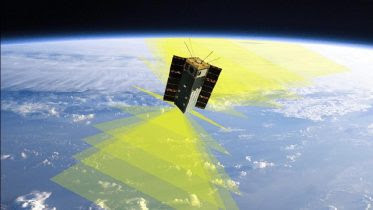
The modern satellites are acting like drone swarms. They are sharing data of the weather and things like the level of cosmic radiation that the control system can switch the system to protected mode. But using multiple different types of satellites as the "drone swarms" is possible to connect data from the different satellites. 

That thing allows making the real-time weather map from the entire Earth. But that technology where satellites are acting as an entirety can connect data from the geological, oceanology, and weather satellites to one entirety. 

But that kind of system can make much more things. They can connect military- and civil satellites to one entirety, that works together. It can connect the radar and optical satellites.  Which makes it possible to make new types of topographic maps. The benefit of the swarms of satellites is similar to drone swarms. They can operate larger areas as an entirety. So that thing allows making a large group of small-size satellites which might have only one sensor. And the swarm technology connects those satellites acting as one big multisensor satellite.

The use of satellites as an entirety is useful to give a warning if some of the satellites are under attack. That's why that technology interests also military operators. The higher flying infrared satellites can observe lower orbiting recon satellites. 

And if those satellites face attacks of ASAT weapons. That thing is noticed immediately. In that case, the system can launch counter-ASAT weapons against incoming missiles. The anti-ASAT weapon can be the satellite-based missile system that shoots the counter projectile against the incoming missiles. The same system is similar to the Israeli "Trophy-system" can also use against the other satellites. Also, the counter-attack satellites can drop conventional bombs from the orbiter. 

The FOBS (Fractional  Orbital Bombardment System) was originally mean nuclear weapon that was positioned to the orbiter. But nowadays that term means satellites that can carry conventional weapons that have gound-attack options. They can drop the quadcopters from the orbiter to the operational area. Those systems can control through satellites and they can be the next-generation versions of the killer drones. 

The quadcopters need only the heat shield that they can travel through the atmosphere. And those copters can have pistol- or rifle-caliber weapons or they can carry high-explosive materials. That means those systems are bringing a new type of threat like the capacity to attack against individual people from the orbiter. The AI-controlled drones can drop from space or they can launch to the area by using missiles. The carrier platform is free. 

And the quadcopters can position themselves above the nuclear missile silos. If the hatches are open the helicopter can drop a grenade in the silo or harm the aerodynamic cover of the missile. The model for this action is taken from parasitoid wasps. They are shooting their egg to the frontal lobe of the victim. In that case, the quadcopter shoots the high-explosive grenade in the missile silo, just when the hatches are opening. 

Or high-flying drone helicopters can just stand in the track of the missile. Hit that kind of target can cause vital damage to the missile if it happens with a speed that is higher than the speed of sound. So the drone swarms can deliver over the missile bases. 

Also, the swarm of recon satellites that are using radars, high-resolution cameras, and the ELINT systems can find interesting targets very accurately. When the electronic surveillance satellites are finding the interesting radio source. The optical recon satellites are aiming their cameras at the target. Then the system can just start an attack if it is authorized to make that thing. 


()https://scitechdaily.com/nasa-engineers-work-to-give-satellite-swarms-a-hive-mind/


Image:()https://scitechdaily.com/images/SmallSat-Polarimeters-373x210.jpg


()https://visionsoftheaiandfuture.blogspot.com/

Sunday, November 10, 2019

The 4G and 5G network co-operation with aerial vehicles

The 4G and 5G network co-operation with aerial vehicles

The ground-based data networks are not always suitable to cooperate with aerial vehicles. The problem with compatible is causing, because of the land-based data networks need different kind of roaming protocol than land-based communication equipment. The roaming means the ability to change the relay station automatically, and the system works that the network is locating the mobile device, and when the other support station turns to dominant, the station would be changed.

And the aerial vehicle has problems that the roaming must happen faster than with the ground vehicles, and the direction or angle of the vehicle is different. The normal data network is created for supporting the ground-based system, and the aerial vehicles can be in the shadow if they are flying over some areas.

The supporting- or relay stations of the network are normally in the places, where is straight visibility to the ground. But to the air is limits. If the station is below the eaves, the metal structure can cover the drone, which flies in the line where is a metal structure in the straight line between the support station and drone. When we are thinking about the possibility to control drones from another side of Earth by using civilian internet that is possible.

But in this case, the drone must equip with the program, which allows it to look for the signals independently if the network signal is gone. Or the drones can work in pairs or groups, where one drone is always keeping contact with the network, and then that drone would deliver the control signals from the internet to other drones.

There are many problems with that kind of thing. But if the quadcopters would be equipped with TERCOM and DSMAC-type systems, they could operate independently in the city areas. In this case, the aircraft or satellite can create the 3D-map image and the drones can use Lidars or other types of systems to observe the area.

Drone swarms and intelligent inertial systems

Some of those drones might be equipped with gyroscopes or inertial navigation systems. That system would record the track, and then it would fly back to the position, where it had last time the control signal. when we are thinking about the intelligent inertial system, the system needs only the gyroscope. And the other data that the system needs would get from propellers.

The system simply calculates how many times the propellers have been rotated during the time unit, and then the system would just fly back the movements, what it has taken. And then the computer just rotates the propellers as many times as it has been rotated during that distance.

So there is not necessarily needed the acceleration sensors at all. The acceleration sensor would be ineffective if it is used in the low-speed flight. But if we are using a laser-based system, what meters the range to the walls and other barriers, that kind of system can calculate the acceleration very effectively even in the low-speed flying.

Lidar is a very good tool for that purpose because it can use as the altimeter. But also normal, small size radar or sonar, what is similar, what is used in the mobile telephones for focusing cameras can be used for that thing. That system can also scan the ground and buildings.

Multiple sensors guarantee the success of the mission, but every drone must not have the same kind of sensor pack. And artificial intelligence makes those swarms very flexible.

The CCD-cameras can look at the environment by using the normal, and infrared frequencies. And those drones can also connect their computers to one bigger entirety, which makes it possible to connect their capacities to run those programs. The drones can also communicate with the satellite by using the GPS and satellite communication sets.

The thing is that only one drone must have the satellite communication set with a high-speed modem. That is so-called "master drone", what would deliver missions to the other and simpler drones. The thing is that the master drones would observe simpler drones, and if some of those "slave drones" would be lost contact, the master sends the relay drone to see, what is happening.

So, in this case, the drone swarm might have many types of members. Only a couple of members have all systems, and the others, what is operating in the "danger zone", where they can be damaged might be simpler. And those simpler drones might be located by using RFID-based triangular metering systems. That helps to keep the price of those systems lower.

Friday, August 2, 2019

The natural-looking recon drones

The natural-looking recon drones

Have you noticed that some hoverflies are like searching for the ID-papers? Of course, this is only a coincidence, that when some person keeps the wallet open, there would come the hoverfly to look for the place, where it can put its eggs. But the new kind of nano-drones or robot bugs might make this kind of things, and the thing is that those drones might look like real bugs.

YouTube and the Internet are full of stories about nanorobots, what are looking like mosquitos, but if I would create recon drone, what can operate undercover, I would choose some other bug than a mosquito. That form should be something, what is not tempt people to damage drone by slapping it with newspaper, and that's why hoverflies or dragonflies would be more suitable for that purpose. The thing is that the small-size drones have limited computing capacity, but they can operate as swarms.

https://www.youtube.com/watch?v=z78mgfKprdg

That means the drone can be remotely connected with the central computer, and the transmitter would not need to be so powerful, as people normally think. This kind of nanotechnical drones can make row to the central computer, that they can communicate from long distances. And they can use lasers or some other optical communication systems for command messages, which makes them very difficult to detect. 

In this solution, the communication would happen from the drone to another, and the small-size drones can get their electricity from high-power radio transmitters, like high power OTH-radars. That allows them to operate unseen and they can collect data from every each person, what is targeted to them.

And those drones are extremely difficult to find. They can communicate with their command center by using the same data transmitters, which are used in the mobile telephones. Those operators can sit in the command center at another side of Earth, or they can work in the operational field. The communication can happen with blue tooth or every other data communication solution.

This would allow the operator to use their mobile telephones antenna for data communication between themselves and drone swarm. Those small drones can make many things, like take the samples of tissue of some people. They can also observe rooms, and collect the data from the WLAN systems. But those drones can also be used to follow the behavior of natural animals, and they can search people from some area. 

Drone-swarms can cover a very large area, and even if they have limited equipment, the large mass of them replaces the quality. That means that every each drone might have different sensors, and they can produce in the operational area. In this that the cores of the drones can put in the small robot unit, which puts the necessary sensor in them.

This supply unit can install in the helicopter, and there could be many types of sensors, which can put in those drones. That equipment could be radio-active or chemical detectors or even the ricin injectors for assassination missions. And this kind of things makes those drones extremely dangerous. They are cheap to produce in the automatized factories, and they are unseen.

Saturday, July 27, 2019

Anti-drone weapons

Anti-drone weapons

The new threats would make a need to create new counter-weapons. Drone-swarms are the threat to the military forces around the world. And when we are thinking about counter-actions against those weapons the most effective thing against them, if we would use the conventional systems are the fast-shooting automatic shotguns like a shotgun version of the normal machine guns and cannons, what are shooting birdshot. The idea is that the drone-swarms would shoot a large number of steel balls, what mission is to shoot down as many drones as possible.

Those weapons can be as an example 155 mm. field howitzer, what is loaded with shrapnel ammunition, which makes that weapon very effective in the purpose, where is needed to destroy very many drones at the same time. But also microwave and plasma-based solutions would be effective in the case, where drone-swarms are attacking against some area.

If this kind of weapon is dropped from the aircraft above the swarm there is a possibility that the EMP-bomb would destroy all electronics of that drone swarm. But the EMP weapon, what bases the technology, where the battery is pressed with explosives. Also, the weapons, which are based with MASER (Microwave Amplification by Stimulated Emission of Radiation) would be used against drone swarms as well as many other targets. 

https://www.globalsecurity.org/military/systems/munitions/hpm.htm

The radars, what are operating by using high voltage microwave frequencies can also terminate incoming aircraft and as well as drone swarms. The difference between radio-and microwaves is that the microwaves are warming targets, and that's why they are used in a microwave oven.

If we would target microwaves to the head of the person, that would cause the same effect, what happens, when the cruel egg is put in the microwave oven. Microwave-frequential electromagnetic radiation would also heat the metals, and if the materials of the aircraft are melting, that would cause the situation, that the body of the aircraft would be destroyed.

That system would create extremely high power microwave burst can also be used against aircraft and satellites. The microwave would be very dangerous for humans and animals, but the reason, why those weapons are created is that the microwave area is sharper than with the use of napalm or some conventional explosive.

There are rumors that the HPV:s (High-Power Microwave Bombs) are meant to use also against the attacking aircraft. That means that those microwave burst weapons would be dropped from the satellites to the route of attacking aircraft and those weapons might sweep those aircraft from the skies. 

EMP-weapons might also damage electronics of the large warships, missile-sites and other places, where the electronics are in a vital role. But if we are thinking about non-lethal and existing things, the most effective weapons can be the ECM-systems, which are used normally to jam the radars.

Those systems can also use to deny the communication between drones and that means that drones lose the data-connections, also ECM-systems can jam normal encrypted communication, what uses the data transmitter. Also, those ECM systems can deny the use of IFF (Identification, Friend or Foe) systems, if they base the radio-communication.

Other versions of the IFF systems use optical data transmitters, what are immune against radio-wave based systems, but they are vulnerable to clouds and smoke, what denies those systems communicate with other systems. And the optical IFF-system is easy to hack. The aircraft or land station must just record those flashes, and copy them to own similar systems.


Chinese new submarine-drone mothership emerges, challenging Western navies.

The image of the Chinese UUV (Uncrewed Underwater Vehicle) mothership. From about a month ago.  “Large long-range UUVs can be used for many ...