Showing posts with label Diatoms. Show all posts

Friday, November 8, 2019

Miniaturized TR3B "Astra" and the use of advanced biotechnology in space systems.

Miniaturized TR3B "Astra" and the use of advanced biotechnology in space systems.

Image I


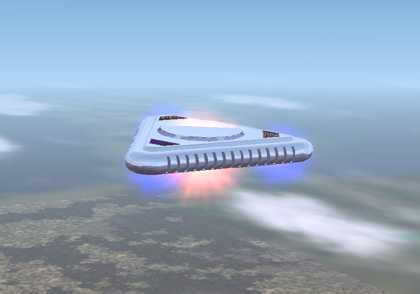
A couple of interesting pictures that are connected with this text are portraying the mysterious "Black Triangle-UFO" and the diatom, and this is a really interesting thing, that those forms are looking like similar. So what this might mean? Is this only coincidence, that some diatom and the triangle-shaped aerial vehicle have the same form?

That might be a coincidence, but if we want to write a little bit longer text, we might take another point of view for that thing. And that thing is connected with the words that "UFOs are not living and they are not dead". So what that thing might mean? Does that thing some connections with the diatoms, what are living almost everywhere?

Sometimes this kind of structure is planned to use in the extremely small-size RPVs, where inside it is the chamber, where is created the overpressure by using the small-sized pump, and then the ventilation of the jet pipes would control the flow of the air. The energy to that system would get from the high-energy radio-transmitters. So this system would operate like full-sized TR-3B "Astra" but it is far smaller. But what kind of things could diatoms do, if they would be genetically engineered, and the silicone would be replaced by titanium atoms.

Image II


When we are thinking about the thing, what is called "advanced organic technology or advanced biotechnology, there could be possible to make the structures of even the spacecraft by using the genetically engineered diatoms. That means that this kind of genetically controlled particle can have similar structures with diatoms, which have two layers of cells. The outer layer is silicone, and the inner layer is the normal cells.

In theory, the same kind of structure can contain cells, where the outer layer would be titanium or pure carbon or rather saying carbon fullerene. That means that the artificial cells can be covered by fullerene, what is produced in the small factories, and the artificial diatoms can in theory form the spacecraft. But if we are thinking sharply, that kind of system would need extremely advanced nano- and biological technology.

But this kind of thing is fascinating, because if we would have the ability to create diatoms, what has the group of atoms, what we want at the outer layer, we could even grow the spaceships in the flowerbed. And that kind of system would allow creating structures, which can fix themselves. But for making that thing successful, the creation of the DNA of those diatoms must be very sharply controlled. But maybe by using nanorobots and artificial intelligence, we might create this kind of system, what are half organic half non-organic.

Image I

https://www.micropia.nl/en/discover/microbiology/diatom/

Image II

https://media.moddb.com/images/groups/1/5/4418/tr3b_astra3.jpg

Monday, November 4, 2019

Diatoms have given inspiration to the most impressive nanomachines, what is remaining somewhere in the future.

Diatoms have given inspiration to the most impressive nanomachines, what is remaining somewhere in the future.

In the movies, we are seeing structures, what can fix itself. The idea of those structures is that they are created by using small robots, what is knowing their place in the structure, and the artificial intelligence would control the entirety. In theory, this is not harder than making 3D-puzzles by using a robot hand, but there is one little difference between the puzzle and the self-fixing structure.

The difference is that every part of the structure must move independently, which means that there must be a power source and mechanic parts, which is making it possible to move every each particle in the right place by using microchip controlled systems. And when the particle is in the right place, it must be locked in that point in the structure.

So what kind of robots that system would need? Those robots might have metalcore, and inside it would be the small silicone bag, which is controlled by microchip. In the core would be little holes, which allows the silicone to come out, and move the thing in the place. And then the top of the silicone tuber is the small metal bite, which will allow locking those tubers in the right place to another nanorobot.

But the problem with those nanomachines is they are needed a very large number. If we are thinking of the nanomachines as the builder of structure, we must realize that the size has a mean. If we want to make nanorobots, which can make very complicated and flexible structures, we need a very small machine. And that's why producing those things are really difficult.

Even if we can think of the structure, and how it works, we must realize, that only the huge number of those creatures can make effective structures. When we are thinking about microchip controlled structure, where the silicone bag is covered by metal or carbon fiber core, we must understand that those machines need more than just those structures.

They need also system, which allows the robot to create the tumbler, what is acting like appendages of cells. That means that inside the silicone bag must be a system, that moves the liquid silicone to a certain point, where is the small iron bite, and for that, the system can use extremely small turbines. The controlling system can be computer-controlled. Some of those robots could involve quicksilver, which will allow them to swim in the right place. At first, the quicksilver would be released to the layer, and then the nanomachines would swim to the right places, and then the quicksilver would suck back in the chambers.

And if we would want to make the extremely advanced system, those metal bites might contain the RFID-system, what the miniaturized system can use as the mass memory. Another nanomachine would touch to those metal bites by using a magnet. But as I have written before, this kind of system is complicated to build, because of the small size of its particles. The energy would transfer to those machines by radio signal, but creating those very tiny machines would be very hard. And maybe terminator will be true after a couple of hundred years.

Wednesday, October 30, 2019

Diatoms, nanomachines, and the computer sciences


Diatoms, nanomachines, and the computer sciences

Diatoms or their cores can use as miniaturized data storage and the parts of nanotechnology. Do you remember CD-ROMs or DVD (Blue Ray) ROMs? Those things were used in the past for storing data before the network-based applications turned those things old fashion. But there might find a use for extremely small optical disks because of that kind of data saving tool very resistant against the electromagnetic radiation, and by using modern technology the DVD and Blue Ray storage can store an extremely large number of data.

So what if we could use the cores of diatoms for that kind of purpose. In this technology, the data would store in the disk by using extremely thin laser, where the diameter of the ray would be so thin as possible to write data to those miniaturized optical disks. And the idea is to benefit the core of disk-shaped diatoms, where the laser would store the data like in the normal-size optical disks.

The idea is to store the data, which should not be damaged to those microcrystals, and that kind of data would be the computer programs, what is used for controlling space probes, and in theory, the entire history of mankind can be stored to those nano-sized optical disks. The small size optical disks are very strong against mechanic corrosion, and that's why they could be effective systems for storing data.

Use as the parts of nanomachines

But the cores of diatoms can be used in many other purposes in nano- and mini technology. They can be used as the miniaturized clutch, which can be used to control the miniaturized motors. And the lasers can also machine those miniaturized parts to miniaturized pinions. If there would be holes in the core of diatom, that thing can be used in miniaturized filters. And the most fascinating tools, that nanotechnology can ever create are the miniaturized "satellites" that would travel inside the human blood veins.

They might have propellers or miniaturized paddle wheels, which allows them to float on the air or travel inside the human body. Those satellites can use magnetic levitation for hovering on air, and that means that below them must be the magnetic layer. But if they are used for searching damages in the places like satellites, manned and unmanned spacecraft and -stations they can hover in zero-gravity conditions, and as I have written many times, they can create their energy by using high-power radio waves.

Radiowaves can deliver energy to miniaturized submarines, what can travel inside the human body, as well in the water lines of the city, and search the things like extraordinary bacteria and pollution. Those systems can capture even single bacteria, and they can search for many things, that people ever can find.

In some ideas, those robots might be used against bacteria and other harmful cells by equipping them with miniaturized centrifuge guns, what would shoot the medicine or something that makes holes to the targeted cells, and those miniaturized satellites can operate inside the human body.

But the can also be used for checking things in the water tubes, and machine technology. In that case, miniaturized robots would travel inside the machines. Those robots can be equipped with RFID-chip, which allows locating every each of them. And miniaturized cameras or laser detectors, what can scan the layer.

One of the most interesting areas, where that kind of thing can operate is space technology. The spacecraft could hover miniaturized robots, which are getting their power from the radio waves. The system would locate the place of every single robot, and those small satellite-looking things can search the damages, which can expand from the places, where normal people cannot even look. And if the group of those miniaturized robots is flowing in the same direction, there might be a leak in the spacecraft.

Image:

https://naturalishistoria.files.wordpress.com/2015/02/diatom-slide.jpg

Chinese new submarine-drone mothership emerges, challenging Western navies.

The image of the Chinese UUV (Uncrewed Underwater Vehicle) mothership. From about a month ago.  “Large long-range UUVs can be used for many ...