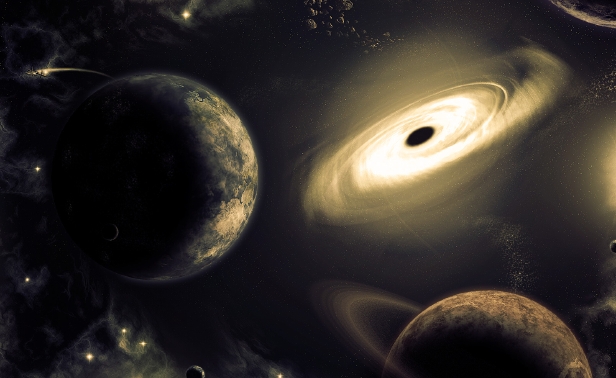
There is the possibility that there are so-called "stealth stars" in the universe
The hypothetical quark star is one of the "should be" objects. But there is no single observation of that type of star. Theoretically, quark stars are the medium between neutron stars and black holes. But why we cannot see that thing?
Could the reflection that comes from free quarks have a wavelength that we cannot observe? The free quarks will send the radiation that has so short wavelength that we cannot observe that radiation because we have no object that resonates with that thing.
What if radiation comes straight from the surface of quarks? Normally the radiation comes from the quantum fields of atoms or protons and neutrons. But if there are free quarks somewhere in the universe, those quarks would send radiation that has so short wavelength that we cannot see that thing. So does that thing explain, why we have no observations about the hypothetical quark stars? Are those objects sending wavelength that is invisible to us?
Could dark energy mean the radiation that comes straight from the surface of quarks? If naked quarks are sending the radiation. That radiation has a wavelength that is shorter than any other radiation. Normally quarks are in the protons and neutrons. And those objects are sending radiation from their quantum fields.
But there is the case where the quarks might be free. That case is the quark star. There is the possibility that the quark stars are invisible to us because in those cases the quarks are sending radiation in the wavelength that is the size of quarks.
The thing that might cause the forming of a stealth star is the case, where the reflection is coming back in the form of a wavelength that is impossible to see. So maybe so-called quark stars have small bubbles of quarks on their surface that make them invisible to the eye.
In that case, the reflection happens with a wavelength that is coming from the frequency of quarks. When radiation hits the quarks they are sending echo as the wavelength that is the same. As the size of those subatomic particles. In normal cases, quarks are in the protons and neutrons. And we can see things like neutron stars.
The reflection from the neutron stars is coming as the wavelength that is the same as the size of neutrons. But in quark star the quarks are naked. They are without the quantum field and give the reflection as the pure quarks. In a neutron star, the radiation reflection comes from quantum fields that surround neutrons. So if naked quarks are giving reflection or sending radiation that means the wavelength of that radiation would be far shorter than radiation that comes from neutrons.
The question of planet 9 is causing an interesting theorem. Could that mysterious object that causes the strange gravitational effect to the trajectory of planet Neptune be the fermion or rather saying quark star.
There is the possibility that the quark stars are invisible because the quarks are sending radiation reflection in a wavelength that is impossible to notice. There is the possibility that quark stars are not smooth. In some theories, the quarks are making the small hills or small bubbles in the surface of the quark stars. And that thing means that the reflection from that surface is coming from an extremely short wavelength.
There is the possibility that there are so-called "stealth stars" in the universe. In some ideas, extremely heavy objects can surround by the whirl of electrons. Which are pushing photons away from the surface. In some other visions, the halo that is caused by reflecting radiation around quark stars can eliminate the reflection. In that case, the star reflects 100% of radiation in the same direction where that incoming wave movement is coming.
And in this case, the counter radiation of the object will delete the incoming radiation. So in this idea, the object acts like an active jammer system that denies the echo of the radiation. When the incoming and reflecting radiation with the same wavelengths hit together they are neutralizing each other.
https://physicsworld.com/a/calculations-point-to-massive-quark-stars/
https://en.wikipedia.org/wiki/Quark_star
https://en.wikipedia.org/wiki/Strange_star
Image:https://physicsworld.com/a/calculations-point-to-massive-quark-stars/
https://thoughtandmachines.blogspot.com/